One Canadian platform, one baseline — from the solicitation you're chasing to the program you're delivering to the audit you'll pass. Get the requirements right once and everything downstream moves faster.
Requirements intelligence isn't one workflow — it's the foundation under five. Start wherever your program hurts today; the same baseline serves the rest when you need it.
Decompose the solicitation in hours, generate a live compliance matrix, turn ambiguities into clarification questions, and absorb late amendments without losing the weekend.
FOR: capture & proposal teamsThe winning response becomes the engineering baseline the day the contract lands — carried through design, test, and validation on one thread, native in Azure DevOps.
FOR: program & systems engineeringNot every firm bids. If your work starts from a spec, a statement of work, or a legacy DOORS baseline, this is requirements engineering at full strength — no proposal required.
FOR: engineering-led organizationsEvidence accumulates while your team works — requirement to design to test to validation — so evaluations, program reviews, and audits are answered from the record, not reconstructed for it.
FOR: quality, audit & program officesReceive flowed-down requirements from your prime cleanly, keep your responses traceable to their baseline, and flow your own requirements down to your suppliers on the same thread.
FOR: sub-suppliers in a prime's chainAzure DevOps-native, proven in regulated engineering programs — with a security and residency posture designed for Canadian defence data. Your data stays yours.
An authentic sovereignty claim, in the government's own language. Almost no competitor in this category can say it.
Canadian Azure residency — defence requirements data remains in-country, under Canadian control.
Independently audited security and quality controls — verified by third parties, not asserted by us.
Workflows built around Canada's standard for sensitive, unclassified defence contract information.
Processing runs on your authorized documents; output lands in your own tenant. Nothing sensitive is ever hosted publicly.
Your documents never pass through — or train — anyone else's model. Fully air-gapped deployment available for sensitive programs.
Compliance isn't a phase; it's the rail the whole program runs on. The same baseline that wins the evaluation carries the engineering and survives the audit.
RFP, RFT, or ITT ingested and decomposed into a structured, atomic requirements tree — in hours.
Live shall-by-shall compliance matrix, gaps turned into clarification questions, amendments traced.
The won bid seeds solution requirements the day the contract lands — no re-keying, no drift.
Every requirement linked to design, test, and validation evidence — native in Azure DevOps.
Engineering proof that stands up to program review — generated as you work, not reconstructed after.
Change impact managed across the fleet's life. The baseline that delivered this program starts the next bid ahead.
An RFP, RFT, or ITT is one large, messy, poorly-structured requirements set. Teams read it manually, under deadline, and lose on compliance technicalities: a missed mandatory, a mis-mapped clause, traceability that can't be shown. That's the exact failure mode this platform was built to prevent. And it doesn't stop at the bid — the same discipline carries the build and answers the audit.
RFP, RFT, or ITT — PDF, Word, or Excel, straight in.
BYODDecomposed into discrete, atomic, editable requirements.
ANALYZEShall-by-shall: comply, partial, exception — live, not static.
TRACEABILITYAmbiguities become your clarification questions on day one.
ELICITFirst-pass narratives your bid writers own and finish.
DYNAMIC PROMPTThe won bid seeds delivery — a warm handoff, no re-keying.
IMPACT ASSESSMENTAmendments included: when the solicitation changes mid-window, impact assessment shows exactly which requirements moved and which parts of your response are affected — so nothing gets missed when Amendment 004 drops three days before close.
Bid tools stop at submission. Engineering tools never saw the bid. Defence programs demand both — the same baseline that wins your proposal becomes the engineering backbone that carries you through design, test, and delivery.
The full bid pack decomposed into discrete, atomic requirements in hours.
The requirements that won the bid become the solution baseline — native in Azure DevOps.
BID → BASELINE → BUILD → EVIDENCE · one thread, no re-entry, no drift
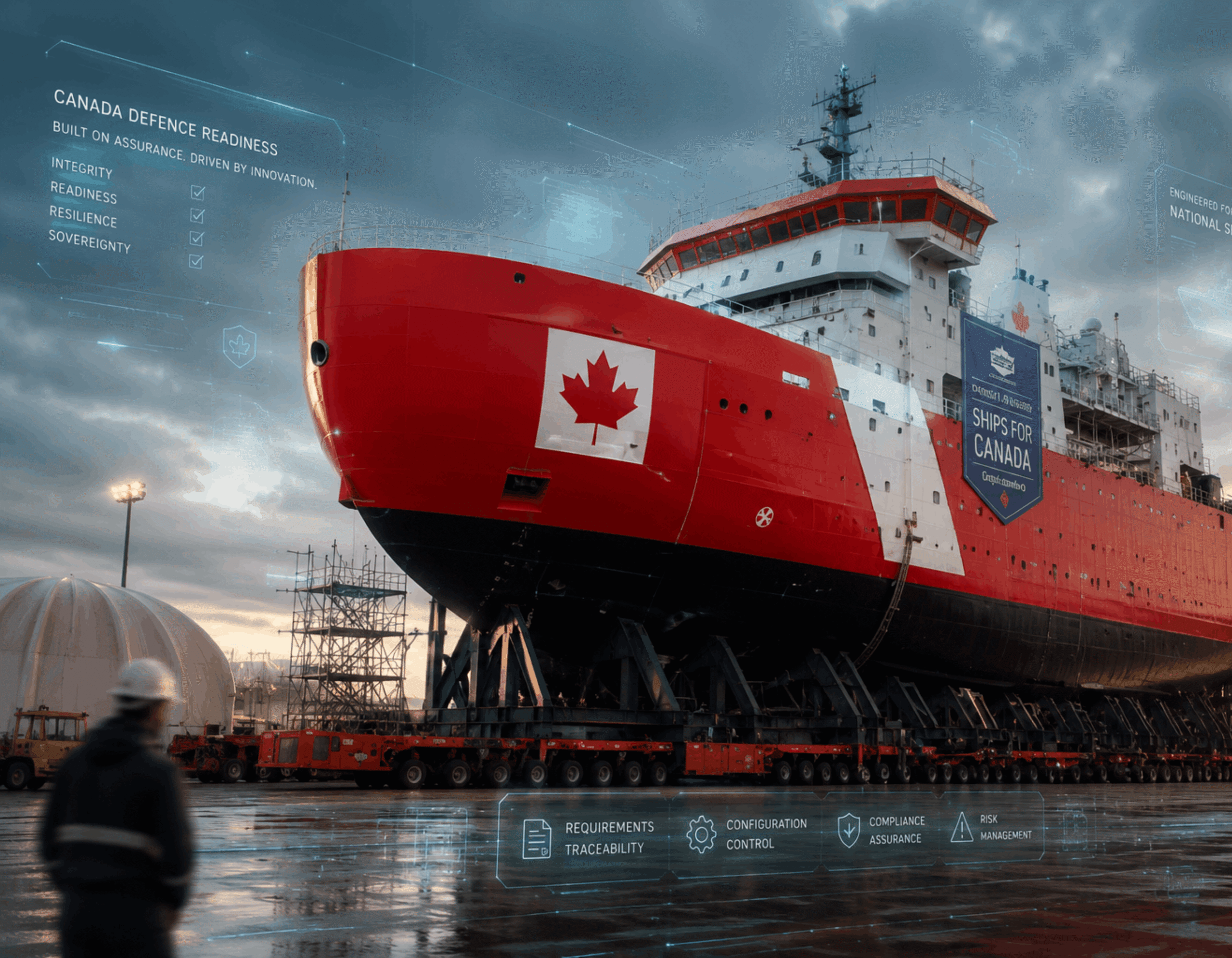
Surface combatants, submarines, icebreakers, and marine systems.
Explore naval →
Fighters, surveillance aircraft, and remotely piloted systems.
Explore air →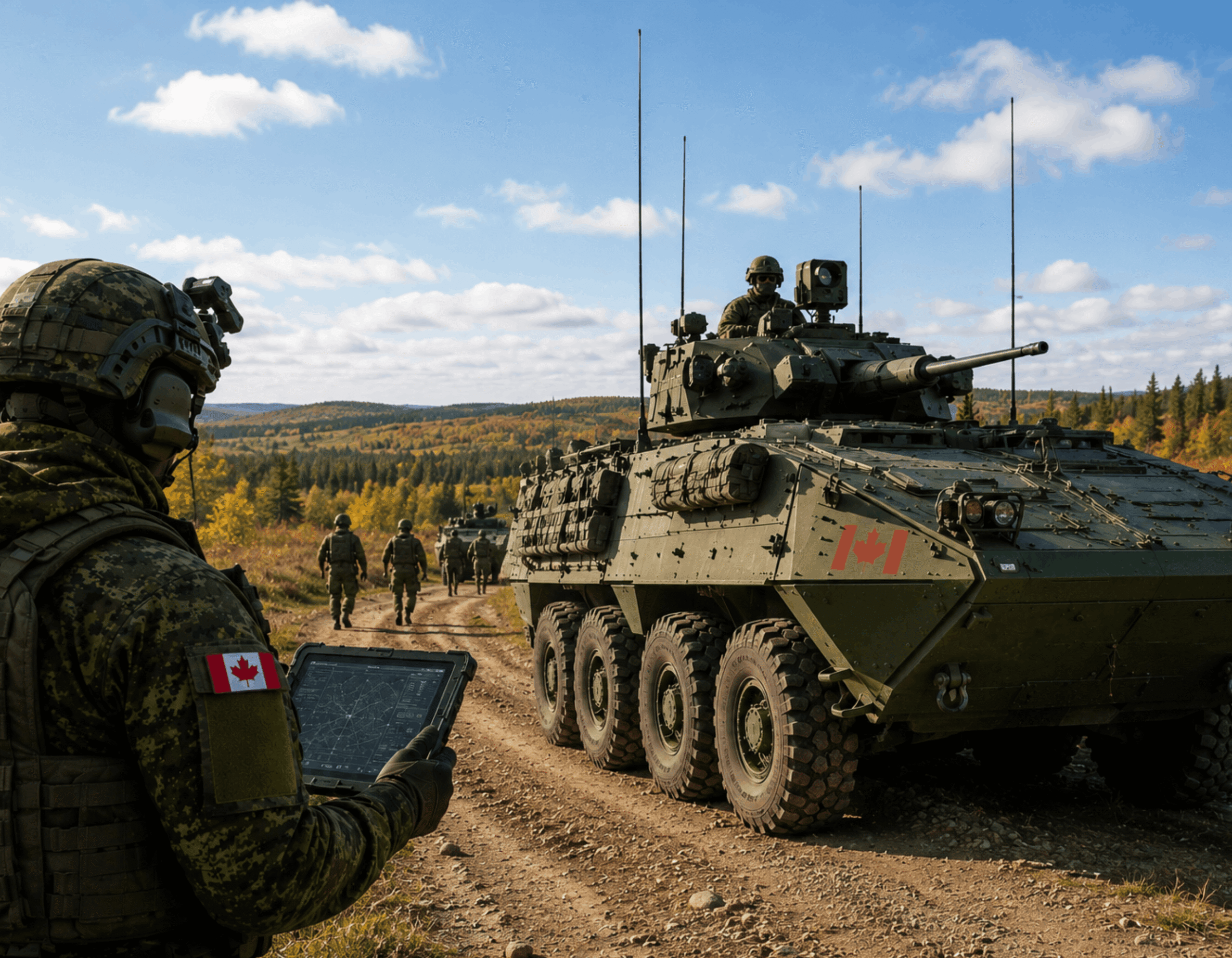
Vehicles, soldier systems, and land command programs.
Explore land →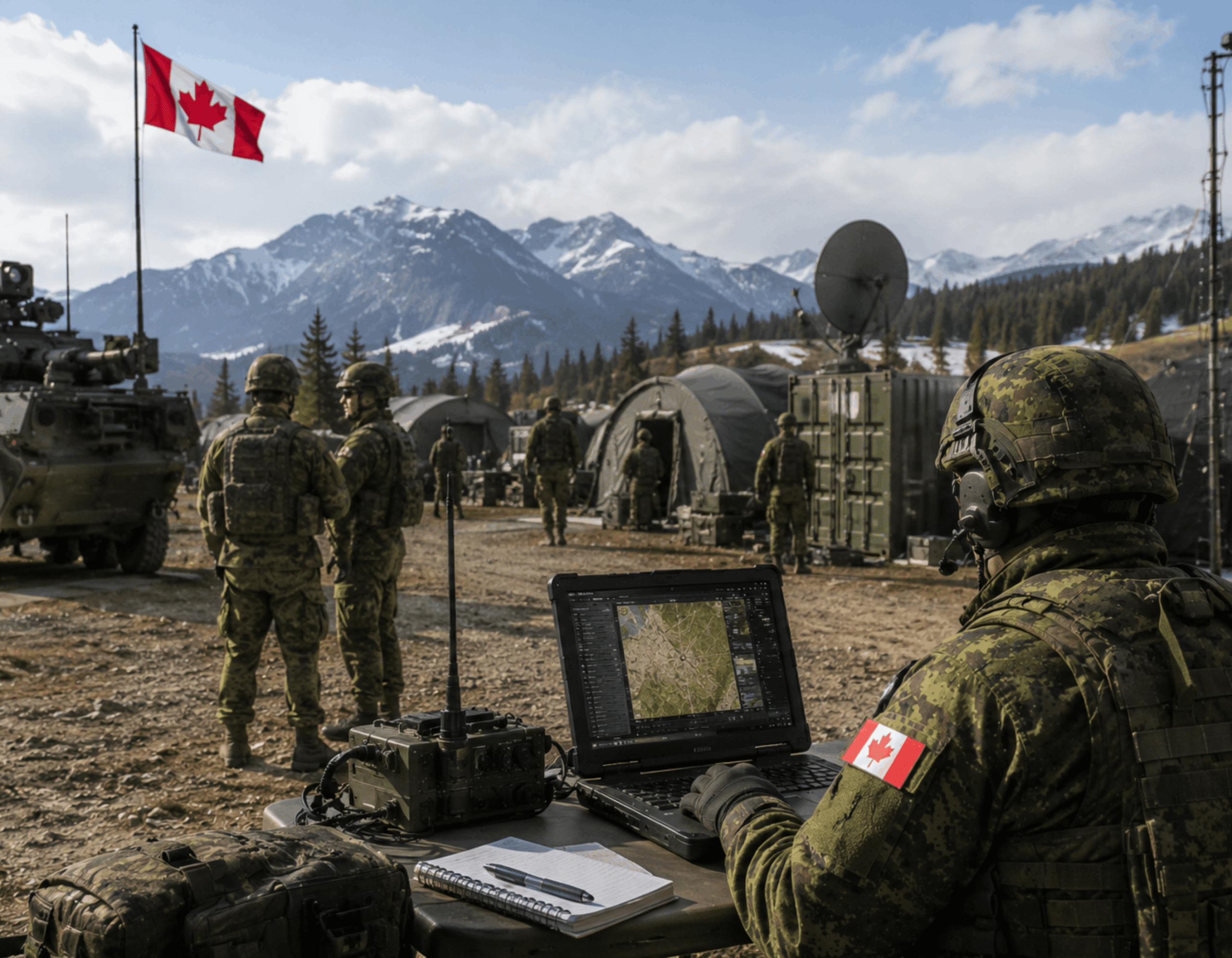
C4ISR, tactical networks, and the digital backbone of operations.
Explore comms →A generational defence build-up, with policy explicitly directing acquisitions toward the domestic industrial base.
ITB obligations mean every major program needs compliant Canadian subcontractors — Tier 2 and 3 suppliers are in demand.
Small teams can't scale bid effort, and compliance knockouts are fatal. We level the field — and carry the win into delivery.
Requirements structures, best practices, and process templates built for Canadian defence work — free to download, ready to adapt.
The baseline structure for decomposing a government solicitation into workable requirements.
Get the template →How to link requirements to design, test, and validation so program review is a formality, not a fire drill.
Get the template →How to structure a compliant response to Canadian RFPs, RFTs, and ITTs — mandatory criteria, clarification strategy, and amendment control.
Get the guide →Book a 15-minute conversation and see a real solicitation turned into a structured, compliant, traceable response position. Nothing sensitive required.
